
Pillar 03 of 7
Food Security
Cutting the food import bill by 25% and building a climate-resilient, profitable agricultural sector.
Overview
St. Kitts and Nevis is a net food importer, with imports accounting for approximately 80% of total national food requirements in 2017 and steadily increasing over the past two decades. The agricultural sector contributes less than 1% of GDP, leaving the country highly dependent on external markets and vulnerable to climatic shocks or surges in demand.
In response, the Government has committed to reducing food imports by 25%. The St. Kitts and Nevis Agricultural Transformation and Growth Strategy 2022-2031 outlines a comprehensive plan to revitalize the agricultural sector, increase local food production, promote healthy eating habits, and enhance resilience to external shocks, fostering a food-secure future by 2040.
Key Facts
- In 2020, 6.4% of the population faced severe food insecurity.
- Per capita fish consumption is 32.3 kg, among the highest globally; 2018 catches were nearly five times higher than 2013.
- The food import bill increased from USD $60.8 million in 2021 to over USD $74 million in 2022.
- In 2017, food imports supplied 80% of the country's food needs.
- St. Kitts and Nevis supports the CARICOM 25 by 25 initiative to cut the region's food import bill by 25%.
- Obesity affects 34% of adult women and 18% of adult men.
The Ministry is resolute in its mission to achieve food and nutrition security in the Federation of St. Kitts and Nevis. In our relentless pursuit of sector transformation, we aim to align with and advance the Sustainable Development Goals.
Hon. Samal Duggins
Minister of Agriculture, Fisheries, Marine Resources and Cooperatives, Entrepreneurship, and The Creative Economy
Goals and Targets
- Reduce food imports by 25% under the 25 by 25 initiative.
- Transform farms into innovative, profitable agribusinesses.
- Develop climate-resilient farming and livestock systems.
- Ensure food and nutritional security with stable, affordable food supplies and fresh fish.
- Strengthen links between agriculture, tourism, and fisheries.
- Modernize livestock production with advanced breeding and climate-smart practices.
- Achieve sustainable fish production and promote sustainable fisheries.
- Attract youth and women to agriculture, strengthen value-added chains, and optimize water use.
Greenhouse Villages Initiative
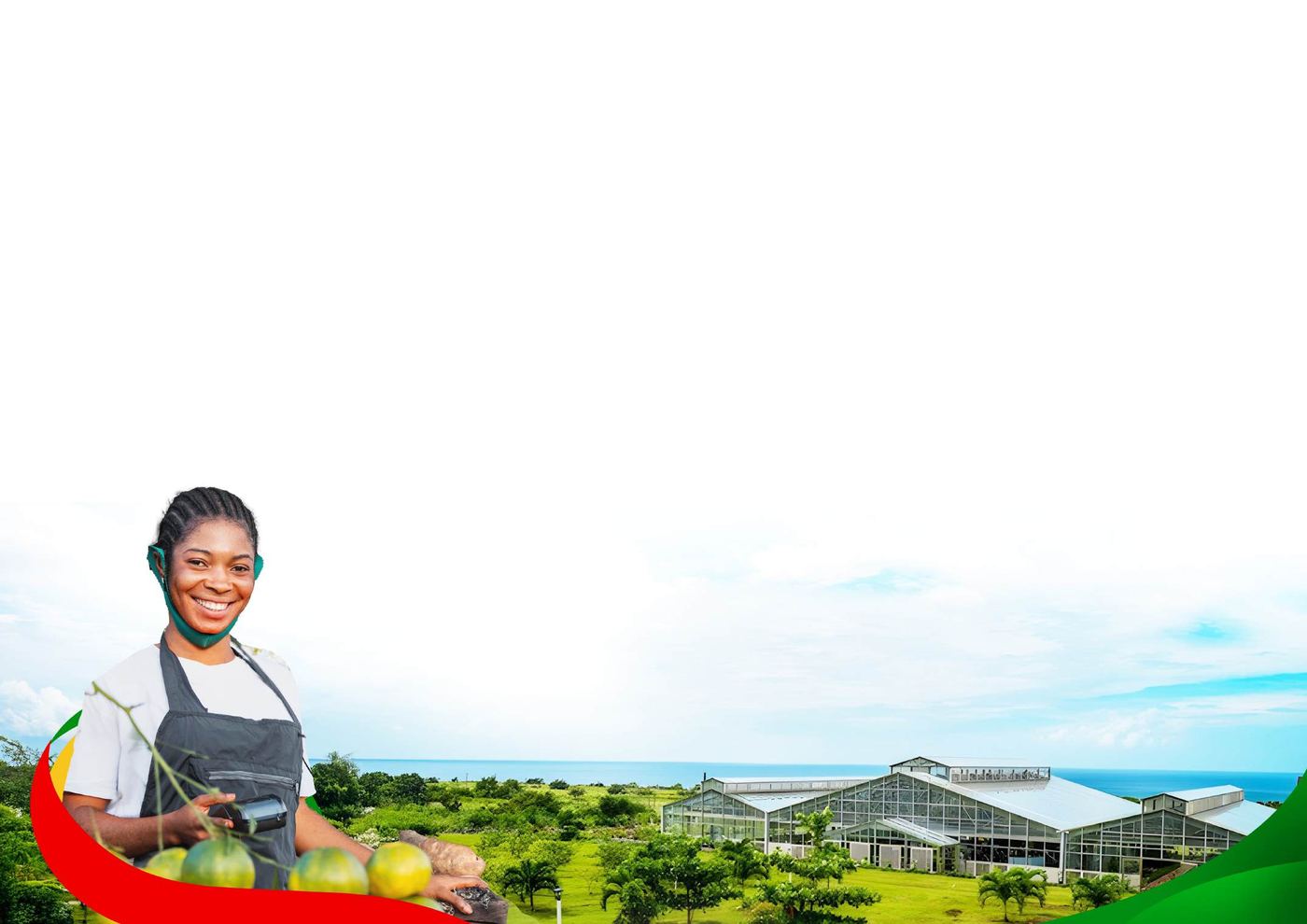
The Greenhouse Villages initiative supports food security and gender equality by providing women with equitable access to greenhouses, enabling their participation in agriculture. To enhance food security, the Government is expanding storage capacity, reducing post-harvest losses, and implementing mechanization to boost production and efficiency.
A new storage facility with six chills has been designed, with construction set to begin soon. By empowering women and investing in infrastructure, the initiative underscores the Government's commitment to a resilient and inclusive agricultural sector.
Key Achievements
- Assisted over 700 farmers with irrigation systems, solar pumps, ground cover, and water tanks.
- Distributed 150,000 pineapple slips, 60,000 banana slips, and thousands of tomato slips free of cost.
- Boosted crop yields: melons up 77%, peppers up 52%, pineapples up over 100%, cabbage up more than 50%.
- Installed 17 cold storage facilities, including two walk-in chillers at Tabernacle and 15 cold containers.
- Partnered with Taiwan to establish a farm producing 20,000 laying birds annually, plus a hatchery and broiler production, reducing reliance on $20 million in chicken imports.
- Launched a plant diagnostic lab in 2024 to identify and control pests.
- Enhanced pig breeding programs and improved fisheries infrastructure, achieving over $15 million in revenue.
- Partnered with Tabasco to secure guaranteed markets for locally grown peppers.
- Developed an agri-processing unit transforming substandard crops into value-added products.
Investment Priorities
- Expand climate-smart agriculture: shade houses, hydroponics, terracing and agroforestry.
- Strengthen water management with the DRIP irrigation project.
- Upgrade agricultural infrastructure: storage facilities and rural roads for market access.
- Leverage technology: mechanization, digital tools, and research for resilient crops and livestock.
- Build human capital: training and attracting youth to agriculture.
- Enhance financial access with tailored agricultural credit and insurance products.
- Increase markets and value addition: market infrastructure, agro-processing, and crop diversification.
How far we have come
Programs such as backyard gardening, shade house distribution, and the Greenhouse Villages initiative have strengthened local food production while promoting gender equality and climate-smart farming. The expansion of hydroponic farming and planned infrastructure investments further demonstrate the Government's commitment to agricultural efficiency and reduced food losses. Progress is determined by NDPF indicators.