
Pillar 02 of 7
Water Security
Universal and equitable access to safe and affordable drinking water for all by 2040.
Overview
St. Kitts and Nevis is committed to becoming a sustainable island state by 2040, with Water Security as one of the seven pillars of this vision, driven by the recognition that the islands are particularly vulnerable to water scarcity and the impacts of climate change.
Freshwater resources are primarily derived from groundwater aquifers, managed by the St. Kitts Water Services Department and the Nevis Water Department, with surface water from springs and desalination plants also contributing to St. Kitts' supply. Freshwater availability is already limited, and population growth has driven increased water demand.
Key Facts
- St. Kitts and Nevis has the highest level of water stress among OECS member states, with 51% of available renewable freshwater withdrawn.
- St. Kitts relies heavily on the Basseterre Valley Aquifer, under pressure from land development and over-pumping.
- Nevis relies solely on groundwater, from three shallow coastal aquifers and two deeper aquifers.
- 31 underground wells provide 70% of potable water on St. Kitts; 31 delineated watersheds supply the remaining 30%.
- Non-revenue water is estimated at 53% in St. Kitts and 30% in Nevis, due to leakages, metering errors and unauthorized use.
- Nearly 90% of household wastewater is stored in septic tanks, at risk of leaking into groundwater or coastal ecosystems.
The Government is investing in water storage capacity to face the effects of climate change and achieve long-term water security. Over-reliance on natural rainfall and well water has become one of the island's major concerns as it relates to effective water distribution.
Hon. Konris Maynard
Minister of Public Infrastructure, Energy and Utilities, Domestic Transport, Information, Communication and Technology
Goals and Targets
- Reduce non-revenue water by replacing aging pipelines with HDPE materials, cutting water loss by up to 5%.
- Increase available water resources by 60% by diversifying water sources, including desalination and well drilling.
- Add 2 million gallons to the daily water supply through the Basseterre desalination facility.
- Transition the water sector to 100% renewable energy by 2030.
- Develop policy, legislation, and capacity for effective water governance.
- Ensure raw water supplies are sustainable and resilient, with climate-resilient supply infrastructure.
- Build water services resilient to extreme weather hazards and pursue integrated water resource management.
Basseterre Desalination Project
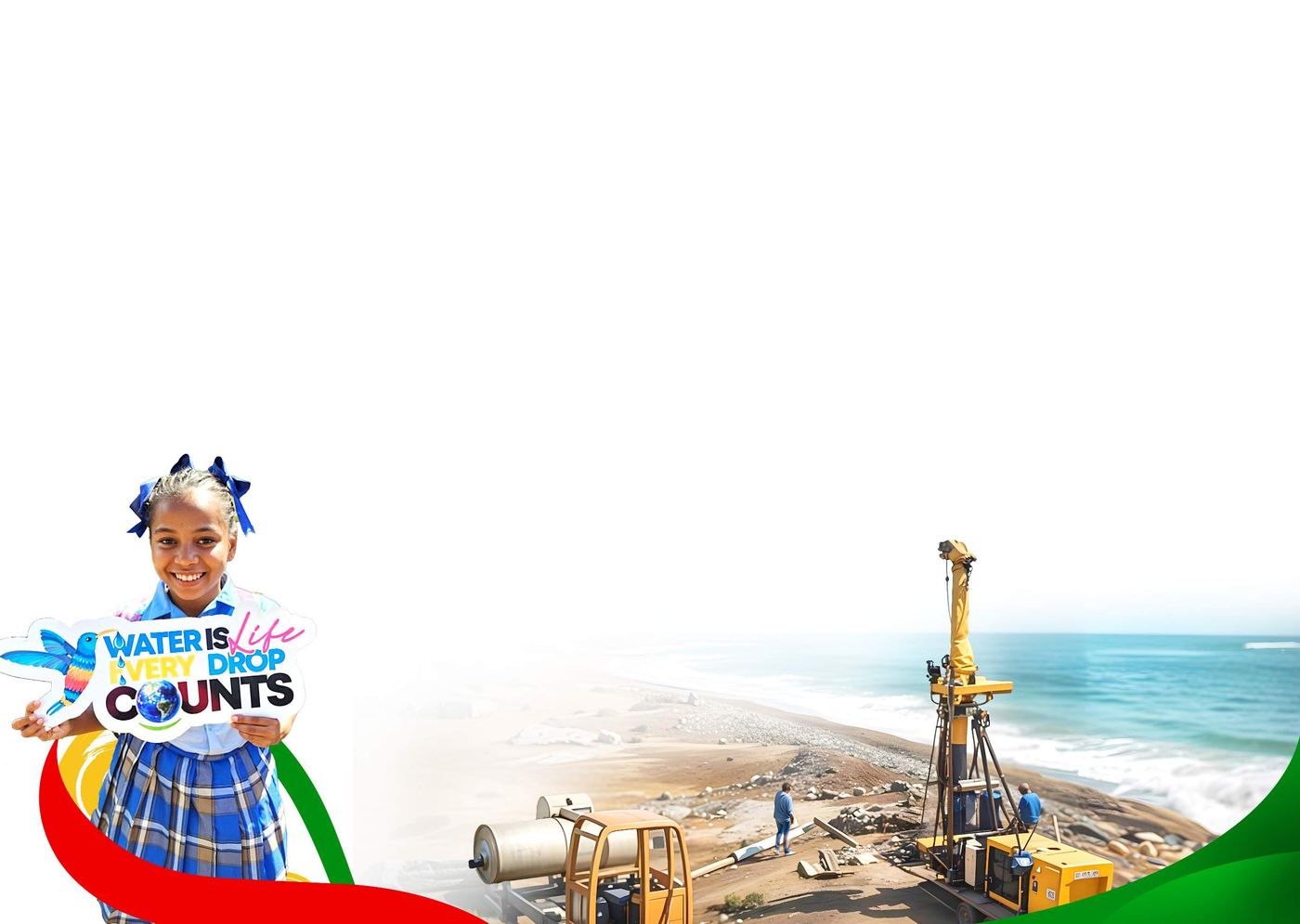
The construction of a desalination plant in Basseterre is a major project aimed at addressing water security. The 2-million-gallon-per-day plant at the Paul Southwell Industrial Park, now under construction, will significantly enhance the availability of potable water for the Basseterre system, ending the water rationing some domestic, commercial and industrial customers have faced.
In addition, a 70,000-gallon-per-day solar-powered desalination plant donated by the United Arab Emirates is in commissioning, desalinated water has been integrated into the system for Frigate Bay and the Southeast Peninsula, and the US $40 million Transboundary Water Project is advancing through the Green Climate Fund.
Key Achievements
- Allocated $50 million to address water shortages and ensure water security.
- Raised the water budget by over 400% and reactivated the previously dormant Water Board.
- Committed to a consistent, 24-7 water supply to meet rising demand.
- Drilled new wells, including a new well in Conaree, and used drone-based geophysical surveys to identify new sources.
- Extended water lines, constructed reservoirs, and upgraded quarry equipment for distribution and storage.
- Began a 1-million-gallon storage tank in Conaree and procured a 200,000-gallon tank for Dieppe Bay.
- Completed the UAE-partnered solar-powered desalination plant, currently in commissioning.
- Advanced a developing National Water Strategy.
Investment Priorities
- Diversify water sources to address the vulnerability of rainfall and groundwater to climate change.
- Modernize water infrastructure, replacing leak-prone pipelines with durable HDPE materials.
- Strengthen water governance with a robust legal and regulatory framework.
- Prioritize water conservation and demand management to align use with limited supplies.
- Upgrade wastewater management, replacing outdated septic systems and improving sanitation infrastructure.
How far we have come
GoSKN has improved water security by constructing desalination plants and expanding well drilling, significantly increasing daily supply. Infrastructure has been upgraded, management strengthened through the re-established Water Board and a developing National Water Strategy, with a growing focus on conservation to support agriculture and tourism. Progress is determined by NDPF indicators.